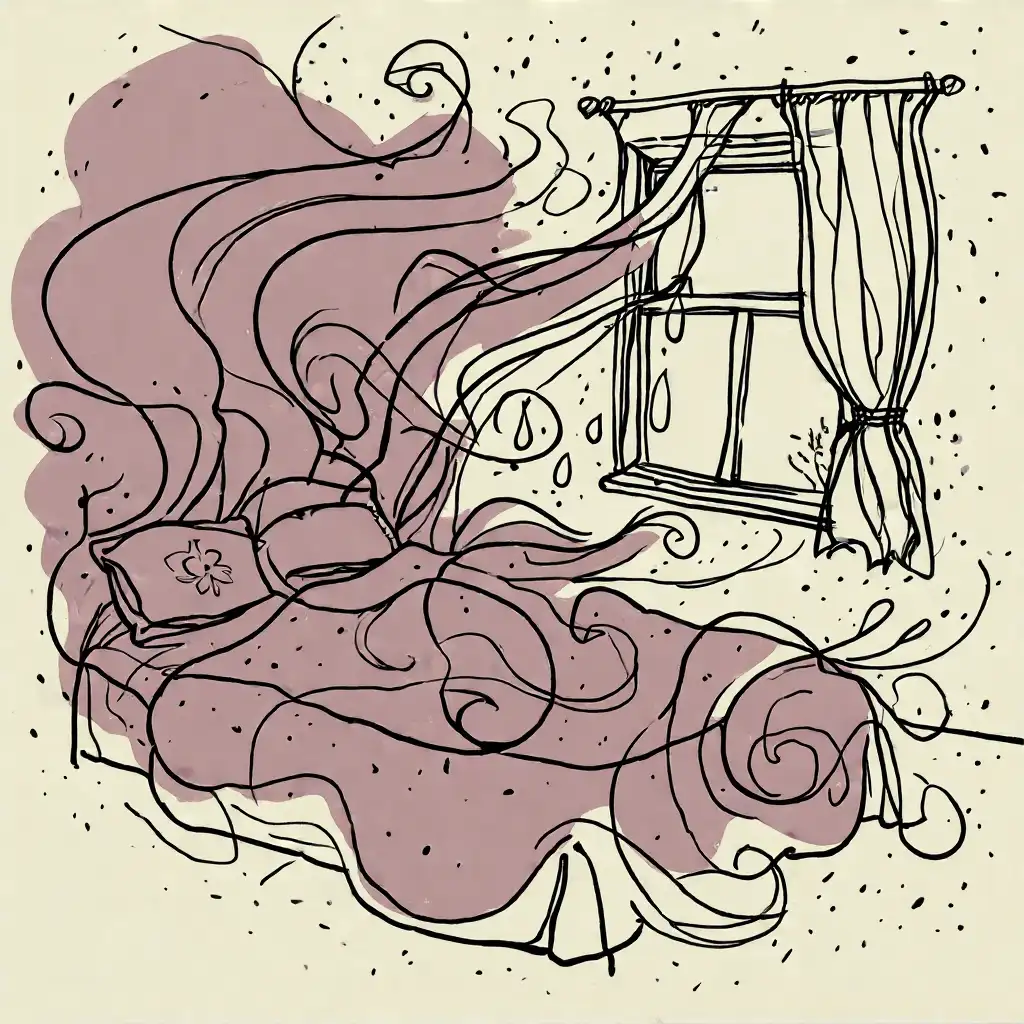
The ceiling is white. Too white. The kind of white that costs money.
Lin Mei stares at it, counting the seconds. One. Two. Three. Her back hurts. Not the dull, constant ache of her old mattress in the workers' dormitory. This is a different pain. The pain of a body that has never lifted boxes. Never stood for twelve hours. Never learned what exhaustion really means.
She sits up.
The room is wrong. Everything is wrong. The bed is too soft. The sheets smell like lavender and new money. There is a window. An actual window with actual sunlight. Her old room had a ventilation shaft that dripped condensation on her pillow.
Her hands are wrong too.
She holds them up. They're small. Unlined. The knuckles are smooth, the skin tight over the bones. These are the hands of someone who has never worked, never scrubbed, never bled. She turns them over, studying the unmarked palms like a stranger reading a map.
A phone buzzes. Somewhere. She doesn't own a phone. Hasn't owned a phone in twelve years.
The buzzing continues. Insistent. Electronic. Alive. She follows the sound to the edge of the bed where a slim silver rectangle glows on the nightstand. A phone. Her phone? But she doesn't have a phone. The last time she touched a phone was when they called from the hospital to tell her mother had died and she'd had to borrow her supervisor's to call them back.
She picks it up. The screen lights up. The time reads 6:47 AM. The date reads March 3rd, 2024.
2024.
That can't be right. The last time she checked, she checked, standing in the parking lot behind the factory in the grey November rain. It was October 14th, 2034. She'd been walking to the bus stop. There had been headlights, too bright, coming too fast, and then nothing.
She drops the phone. It bounces once on the mattress and lies there, screen still glowing, accusing.
She gets out of bed. The floor is hardwood, not concrete. There's a rug. An actual rug, soft and patterned, beneath her bare feet. She takes one step, then another. Each one feels like a question she doesn't know how to answer.
The room is large. Larger than any room she's ever slept in. There's a desk by the window with a laptop and a stack of textbooks. There's a wardrobe. Real wood, standing open. The clothes inside are ones she doesn't recognize. Blouses. Skirts. Brands with names she can't pronounce. There's an ensuite bathroom through a door she pushes open, revealing marble counters and a shower so clean it looks unused.
She catches her reflection in the mirror above the sink.
The face looking back is not her face.
It's worse than that. The face looking back is exactly her face. The face she sees in photographs from her school days. The few documents that survived her move to the dormitory. The dreams she stopped having around age thirty. It's her face at sixteen. Smooth skin, still carrying the softness of childhood. Dark hair falling past her shoulders. Eyes that haven't learned yet what disappointment looks like.
Lin Mei opens her mouth. This Lin Mei. The sixteen-year-old Lin Mei. The sound that comes out is not quite a scream and not quite a word. It exists somewhere between them, the noise of a person discovering the rules of their own existence have been rewritten overnight.
The door opens. A woman appears. Late thirties. Expensive blouse. The kind of casual elegance that comes from money and the confidence money buys. She looks at Lin Mei standing frozen in front of the mirror, at the phone abandoned on the bed, at the fear radiating off the girl like heat.
"Mei-mei?" The woman's voice is careful. "Are you okay? I heard something."
Lin Mei turns. The woman is wearing pearl earrings and a thin gold chain and the expression of someone who has never once worried about whether there would be food on the table. She's beautiful. In the way that expensive things are beautiful. Polished. Intentional. Maintained.
"Who are you?" Lin Mei hears herself ask. Her voice is higher than she remembers. Younger.
The woman's face shifts. Concern, then something softer. "I'm your mother," she says. "Are you feeling alright? You look pale."
Your mother. The woman who has been dead for six years. The woman Lin Mei called every Sunday for twenty years. The woman who died in a hospital bed while Lin Mei sat beside her and held her hand and told her it was going to be okay even though they both knew it wasn't.
"I had a dream," Lin Mei says. The lie comes automatically, built from years of covering bruises, of explaining away failures, of surviving in systems not designed for girls like her. "A bad dream. I just need a minute."
The woman crosses the room and puts a hand on Lin Mei's forehead. Her fingers are cool and smell like jasmine. "You do feel warm. Maybe you should stay home today. I'll call the school."
School. Lin Mei hasn't been inside a school in twenty-six years. The last time she sat at a desk, she was nineteen and failing and running out of time.
"Okay," she says. "I'll stay home."
The woman nods and squeezes her shoulder and leaves. Her mother, apparently. This version of her mother who is still alive, still here, still wearing silk blouses and pearl earrings. The door clicks shut.
Lin Mei sits down on the edge of the bed. The mattress gives beneath her. Soft. Expensive. Nothing like the board-stiff dormitory cot she last slept on.
She picks up the phone again. It recognizes her thumbprint. The home screen shows a wallpaper of a mountain lake, blue and still. There are apps she doesn't know how to use, messages from people whose names she doesn't recognize, a calendar full of appointments and reminders for a life she doesn't remember living.
She opens the messages. Most of them are in Chinese, which she reads fluently, and some are in English, which she reads haltingly. The language mix is confusing. Too modern. Too casual. Full of abbreviations and emojis that didn't exist a decade ago.
There are photos. Hundreds of them. She scrolls through and sees herself at a birthday party. At a beach. At a restaurant with friends whose faces are blur with youth and ease. This younger version of herself. She looks at each one and feels nothing. She doesn't know these people. She doesn't remember this life.
She puts the phone down and looks around the room again, as if the walls might have changed while she wasn't looking.
This is a second chance.
The thought arrives fully formed, like a diagnosis.
She's been given a second chance.
Lin Mei spent twenty-six years making mistakes. The older Lin Mei. The one who died. She dropped out of school at nineteen. She worked in factories and restaurants and warehouses. She sent money home until there was no more home to send it to. She lived in dormitories and rented rooms and once, for three cold months, in a 24-hour McDonald's because it was warmer than the streets. She never traveled. Never studied. Never fell in love properly, not once. She watched her friends from school drift into careers and marriages and lives while she stayed stuck, visible and invisible at the same time, passing through the world without leaving a mark.
She died on a rainy Tuesday, hit by a car while walking to a job that paid 4,000 yuan a month to stand on her feet for ten hours.
And now she's here.
In a body that doesn't hurt. In a room that costs money. With a mother who is still alive.
She lies back on the bed. The ceiling is white. Too white. But for the first time in longer than she can remember, she doesn't mind the white. She stares at it and thinks: I am sixteen years old. I am in 2024. I have a future.
She closes her eyes.
She has no idea what's coming.
天花板是白色的。太白了。白得像是花了钱的那种白。
林梅盯着天花板,数着秒。一、二、三。她的背在疼。不是那种旧宿舍里硬板床带来的钝痛。是另一种痛。一具从未搬过箱子的身体。从未站过十二个小时的身体。从未真正懂得什么叫疲惫的身体。
她坐起身。
房间不对劲。一切都不对劲。床太软。床单闻起来是薰衣草和新钱的气息。有一扇窗户。真正的窗户。真正的阳光。她以前的房间只有一个通风井,冷凝水会滴在她枕头上。
她的手也不对劲。
她把手举起来。手很小。没有皱纹。指节光滑,皮肤紧贴着骨头。这是一双从未干过活、从未搓洗过、从未流过血的手。她把它们翻过来,像陌生人读地图一样端详着没有痕迹的掌心。
手机响了。在某个地方响。她没有手机。十二年来她没有过手机。
手机一直在响。执拗地。电子地。活着地响着。她顺着声音走到床边,一个银色的薄片在床头柜上发光。是手机。她的手机?可她没有手机。上一次她摸手机,是医院打来告诉她母亲去世的时候,她不得不借主管的手机回拨过去。
她拿起手机。屏幕亮了。时间显示早上6:47。日期显示2024年3月3日。
2024年。
这不可能对。她最后看时间的时候,她站在工厂后面的停车场,十一月的灰雨里。是2034年10月14日。她正走向公交站台。有车灯,太亮,冲得太快,然后什么都没有了。
她把手机扔了。手机在床上弹了一下,躺在那里,屏幕仍然亮着,像在控诉。
她下了床。地板是硬木的,不是水泥的。有一块地毯。真正的地毯,软软的,带图案的,在她赤脚下。她迈出一步,又一步。每一步都像一个她不知道如何回答的问题。
房间很大。比她住过的任何房间都大。窗边有一张书桌,上面放着笔记本电脑和一摞教科书。有一个衣柜,真正的木头,敞开着,里面是她不认识的衣服。衬衫。裙子。她念不出名字的品牌。穿过一扇门是套间浴室,她推开一看,大理石的台面,干净得像没人用过的淋浴。
她在洗手台上方的镜子里看到了自己的倒影。
镜子里回望她的脸,不是她的脸。
比那更糟。回望她的脸正是她的脸。那她在学生时代的照片里见过的脸。少数从她搬到宿舍后幸存下来的文件里见过的脸。她在三十岁左右就停止做的梦里见过的脸。那是她十六岁的脸。光滑的皮肤,还带着童年的柔软。乌黑的头发垂过肩。眼睛还不知道失望是什么样子。
林梅张开了嘴。这个林梅,十六岁的林梅。发出的声音不完全是尖叫,也不完全是一个词。它存在于两者之间。是一个发现自己存在的规则在一夜之间被重写的人发出的声音。
门开了。一个女人出现。三十多岁。昂贵的衬衫。一种由金钱和金钱带来的自信所塑造的优雅。她看着林梅站在镜子前僵住、看着被丢在床上的手机、看着从女孩身上散发出的恐惧。
"梅梅?"女人的声音小心翼翼。"你没事吧?我听到什么声音了。"
林梅转过身。这个女人戴着珍珠耳环和细细的金项链,脸上是一种从未担心过桌上是否有饭的人的表情。她美得像昂贵的东西。精雕细琢的。有意图的。被维护着的。
"你是谁?"林梅听到自己问。她的声音比她记忆中更高。更年轻。
女人的脸变了。担忧,然后是某种更柔和的表情。"我是你妈妈,"她说。"你还好吗?你看起来脸色苍白。"
你妈妈。那个已经死了六年的女人。那个林梅二十年来每周日都打电话的女人。那个死在医院病床上、林梅坐在旁边握着她的手、告诉她一切都会好起来尽管他们都知道不会的女人。
"我做了一个梦,"林梅说。谎言自动涌出,是多年掩盖淤青、解释失败、在不为她这样的女孩设计的系统里生存的习惯。"一个噩梦。我需要一分钟。"
女人穿过房间,把手放在林梅额头上。她的手指冰凉,闻起来像茉莉。"你确实有点发烧。也许你应该今天待在家里。我给学校打电话。"
学校。林梅二十六年来没有进过学校。最后一次坐在课桌前,她十九岁,在失败的边缘,时间快要用完了。
"好的,"她说。"我待在家里。"
女人点点头,捏了捏她的肩膀,离开了。她的母亲, apparently。这个版本的她母亲还活着,还在这里,还穿着丝绸衬衫和珍珠耳环。门咔哒一声关上。
林梅坐在床沿上。床垫在她身下凹陷。软的。贵的。和她最后睡过的那个硬邦邦的宿舍床完全不同。
她又拿起了手机。手机认出了她的指纹。主屏是一幅山湖的壁纸,蓝色的,平静的。有她不知道怎么用的应用,有她不认识名字的人发来的消息,有一个装满了她不记得的生活的日程表。
她打开消息。大部分是用中文写的,她能流利阅读,有些是英文的,她读得很吃力。语言混杂让她困惑。太现代了。太随意了。充满了十年前还不存在的缩写和表情符号。
有照片。数百张。她翻看着,看到了自己。这个年轻版本的自己。在生日派对上。在海滩上。在一家餐馆里和朋友们在一起,那些因年轻和轻松而模糊的脸。她看着每一张,什么都感觉不到。她不认识这些人。她不记得这个生活。
她放下手机,又环顾了一下房间,好像墙壁在她不注意的时候可能会变一样。
这是第二次机会。
这个想法完整地出现,像一个诊断。
她得到了第二次机会。
林梅花了二十六年犯错误。这个年长的林梅,死去的那个。她十九岁从学校辍学。她在工厂、餐厅、仓库工作。她寄钱回家,直到没有家可寄了。她住过宿舍,出租房,有三个月住在24小时营业的麦当劳里,因为那比街上暖和。她从未旅行过。从未学习过。从未真正恋爱过,一次也没有。她看着她学校时的朋友们漂进了职业、婚姻和生活,而她停留在原地,存在着又不存在,穿过世界却不留痕迹。
她在下雨的星期二死去,走向一份月入四千元、站十个小时的工作时被车撞了。
而现在她在这里。
在一个不痛的身体里。在一个花钱的房间。有着一个还活着的母亲。
她躺回床上。天花板是白色的。太白了。但这是她能回忆起的很久以来第一次,她不介意白色。她盯着它想:我十六岁。我在2024年。我有未来。
她闭上眼睛。
她完全不知道将要发生什么。