The long-distance bus station at night is a landscape of neon blue signs, diesel exhaust, and restless energy. Travelers sit on plastic rows of chairs, surrounded by woven plastic luggage bags and boxes of local specialty cakes, their faces illuminated by the harsh glow of their smartphones.
Xiaoyu floats through the ticket barriers without a sound. Nobody stops her, nobody asks for an ID card or a digital ticket code. She follows the warm vibration in her chest straight to Platform 7, where a massive, double-decker sleeper bus is idling, its engine sending heavy vibrations through the concrete platform.
The destination plate behind the windshield glows with red LED characters: Yunnan Route. It is heading thousands of kilometers away, toward the misty mountain towns far to the south.
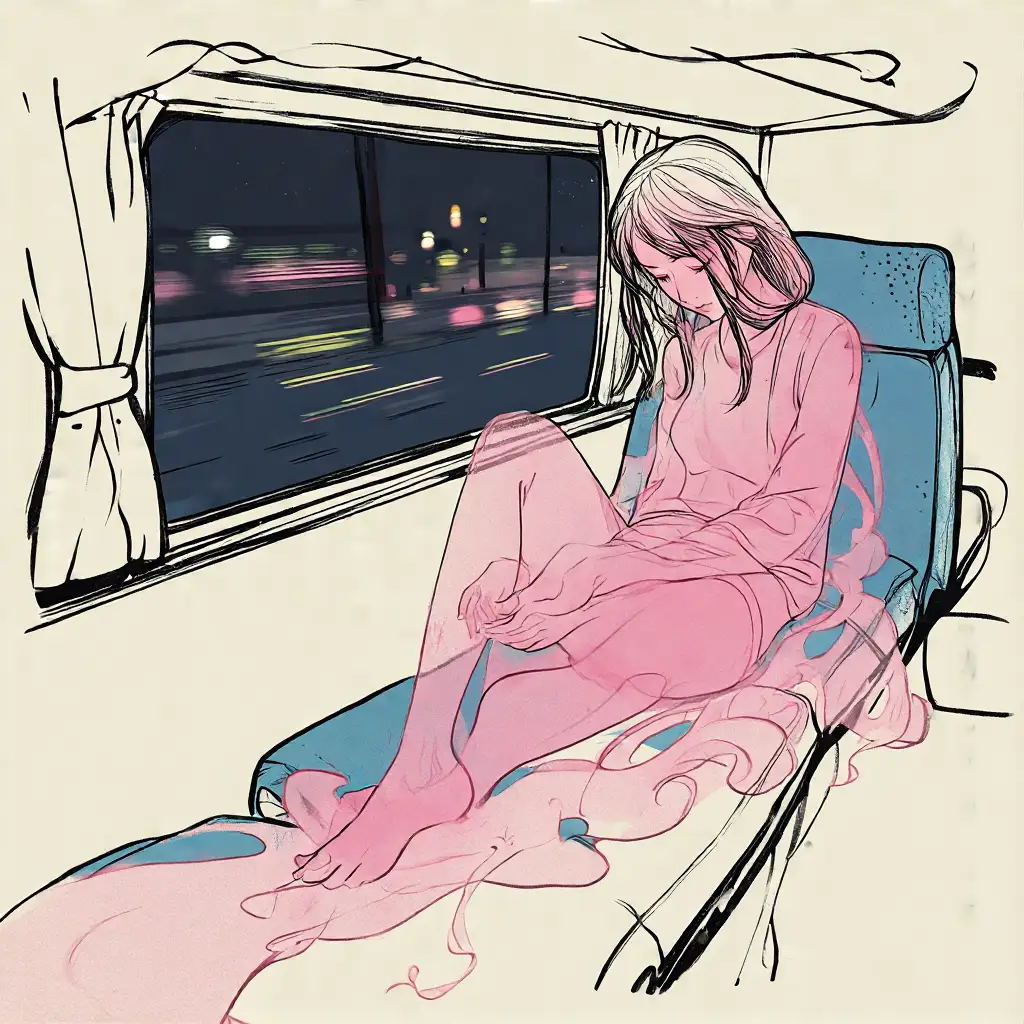
Xiaoyu steps onto the bus, passing straight through the folded glass doors. The interior smells of stale upholstery, instant noodle seasoning, and old leather. The passenger cabin is lined with two tiers of narrow, blue-vinyl bunks separated by aisles barely wide enough for a shoulder. Most of the passengers are already curled up under their thin quilts, their shoes tucked neatly beneath the lower berths.
She walks to the very back row of the upper tier, selecting an empty bunk next to the rear window. She does not lie down, she sits cross-legged against the padded wall, her weightless form causing no indentation in the mattress.
With a loud hiss of hydraulic brakes, the bus pulls away from the platform. It navigates the dark, narrow streets of her hometown, passing the familiar bright signs of the local hotpot restaurants, the glowing entrance of the 24-hour convenience stores, and finally, the distant, dark silhouette of her high school compound.
Xiaoyu presses her forehead against the glass window. She cannot feel the coldness of the pane, but she watches the flashing streetlights slowly blur into long, continuous lines of color as the bus accelerates onto the elevated highway.
An hour passes, and the city lights give way to the deep, absolute darkness of the countryside. The only illumination comes from the glowing green signs marking the highway exits and the occasional headlights of passing cargo trucks. Inside the cabin, the passengers are asleep, the rhythm of their breathing blending into the steady, mechanical rumble of the tires against the asphalt.
Xiaoyu looks down at her hands. They look different out here, away from the familiar spaces of her life. The faint, transparent quality is gone, replaced by a soft, steady luminescence that feels solid in the dark.
The heavy, suffocating sadness that had defined her first few days as a ghost has completely dissolved. She does not feel afraid of the distance increasing between her and her family apartment. She does not feel bitter about the truck on that rainy morning.
Death is not a hard stop, she realizes. It is just a different kind of transition, a change in frequency. She isn't a tragic phantom haunting a classroom anymore. She is a traveler moving toward a new horizon, carrying the quiet love of her primary school friend and the gratitude of her classmates with her into the dark. She is ready for whatever the road wants to show her.
The journey ends forty-eight hours later in a valley tucked deep between ancient, forested peaks.
When the sleeper bus rolls into the southern mountain terminal, a gentle, quiet rain is falling over the landscape. It is not the cold, aggressive rain of her hometown, but a soft, warm mist that clings to the traditional tiled roofs of the buildings and smells of damp earth, wild pine, and woodsmoke.
夜间长途汽车站是一片霓虹蓝标牌、柴油尾气和焦躁能量的景象。旅客们坐在塑料一排排椅子上,周围是编织塑料行李袋和本地特产蛋糕盒,他们的脸被智能手机刺眼的光芒照亮。
小语无声地飘过检票口。没有人拦住她,没有人要身份证或电子车票。她跟随胸口温暖的震动,直接来到七号站台,一辆巨大的双层卧铺大巴正在怠速,引擎在水泥站台上发出沉重的震动。
挡风玻璃后面的目的地牌亮着红色的LED字样:云南线路。它正驶向千里之外,向南边雾气缭绕的山城。
小语走上大巴,直接穿过折叠的玻璃门。内部闻起来是旧皮革、速食面调味料和旧皮革的味道。客舱两侧是两排狭窄的蓝色乙烯基卧铺,中间由一条窄到仅容肩膀通过的过道隔开。大部分乘客已经蜷缩在薄棉被下,鞋子整齐地塞在下铺下面。
她走到上层最后排,选择靠后窗的一个空铺位。她没有躺下,而是盘腿坐在软垫墙壁上,她轻盈的身形不会在床垫上留下任何凹痕。
随着液压刹车的巨响,大巴驶离站台。它在故乡黑暗狭窄的街道上穿行,经过当地火锅店熟悉的明亮招牌,经过24小时便利店发光的入口,最终经过小区那遥远、暗淡的轮廓。
小语把额头贴在车窗玻璃上。她感觉不到玻璃的冰凉,但她看着闪烁的路灯随着大巴加速到高架公路而慢慢模糊成连续的彩色线条。
一个小时过去了,城市灯光让位于乡村深沉的、绝对的黑暗。唯一的照明来自高速公路出口处发光的绿色标牌,以及偶尔经过的货运卡车的车头灯。车厢内,乘客们已经睡着了,他们的呼吸节奏融入轮胎撞击柏油路面的稳定、机械的轰鸣声中。
小语低头看着自己的双手。在远离她熟悉生活的这里,它们看起来不同了。那种微弱、透明的质量消失了,取而代之的是一种柔和、稳定的发光,在黑暗中感觉是实质的。
那种定义她作为鬼魂最初几天的沉重、令人窒息的悲伤已经完全消散。她不害怕与家人公寓的距离不断增加。她不怨恨那个雨夜早晨的卡车。
死亡不是硬性停止,她意识到。它只是一种不同类型的转变,一种频率的变化。她不再是在教室里徘徊的悲剧幽灵了。她是一个走向新地平线的旅行者,带着她小学朋友的静静的爱和同学们的感激,步入黑暗。她准备好迎接这条路想要展示给她的一切。
卧铺大巴在两天后抵达一座隐藏在古老森林山峰之间的山谷时,旅程结束了。
当卧铺大巴驶入南部山城终点站时,温柔的、安静的雨正落在大地上。那不是她家乡冰冷的、猛烈的雨,而是一种柔软的、温暖的雾气,附着在建筑物的传统瓦屋顶上,闻起来像湿土、野松木和木柴烟。