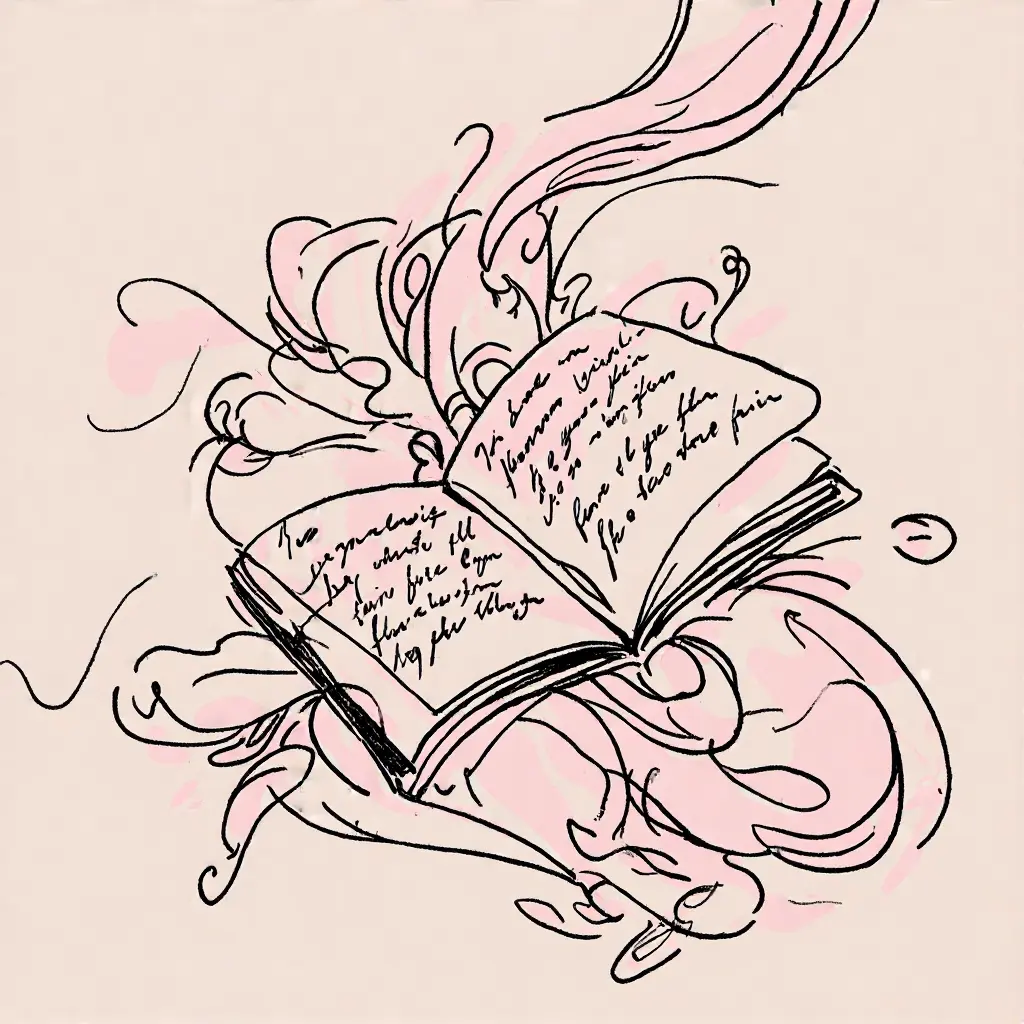
The notebook is open on the bed.
Little Mei has brought it. She has never shown it to anyone. Not her mother. Not her teachers. Not the girls who whisper in the hallways. But she has brought it here, to this room, to this bed, to this impossible person who knows too much and explains too little.
Lin Mei looks at the pages. The handwriting is familiar. It is her own handwriting, twenty-six years younger. The same slant. The same pressure. The same way of crossing t's that she thought was unique to her but is apparently genetic.
"You wrote this," Little Mei says. It is not a question. "Not me. You. The same words. The same poems. I found them in your bag. I wasn't snooping. I was looking for a pen. But I found them. And they're the same."
Lin Mei closes her eyes. The moment she has been dreading has arrived. The truth, demanding to be told. The lie, demanding to be confessed.
"I can explain," she says.
"Then explain," Little Mei says. Her voice is hard. Her voice is scared. "Explain why you have my poems in your bag. Explain why you know things about me that no one knows. Explain why you look at me like you're looking at a ghost. Explain why you cry when you think I'm not watching. Explain everything."
Lin Mei opens her eyes. She looks at the girl sitting on her bed. The girl with her face. The girl with her poems. The girl with her life, lived badly, lived briefly, lived without ever knowing that it mattered.
"I'm you," Lin Mei says. "I'm you, twenty-six years from now. I died at forty-two. I woke up here. In this body. In this room. In this life that isn't mine. And I don't know why. I don't know how. I don't know if I'm dreaming or dead or crazy. But I know you. I know you because I was you. I know your poems because I wrote them. I know your fears because I lived them."
Little Mei is very still. The notebook is open on the bed between them. The pages are filled with words that both of them have written, in different times, in different bodies, in different lives that are somehow the same.
"That's impossible," Little Mei says.
"I know," Lin Mei says. "But here I am."
"Prove it," Little Mei says. "Prove you're me."
Lin Mei thinks. She searches her memory. She looks for something that only she would know. Something that no one else could possibly know.
"The jar," she says. "The peanut butter jar. Your mother uses it for pickles. She has been using it for six years. The label is half-peeled. The glass is scratched. And inside, on the bottom, there is a crack. A small crack. You noticed it last month. You were afraid it would break and the pickles would spill and your mother would be sad because she can't afford a new jar."
Little Mei's eyes are wide. Her mouth is open. She doesn't speak.
"The poem on page seventeen," Lin Mei continues. "The one about the factory smoke. You wrote it on a Tuesday. It was raining. You were supposed to be studying for a math test. But you couldn't focus because your mother was working a double shift and you were alone in the apartment and the rain made you think of everything you would never have."
"Stop," Little Mei whispers.
"The scar on your knee," Lin Mei says. "You got it when you were eight. You fell off your bicycle. Your mother couldn't afford to take you to the doctor so she cleaned it with boiled water and sewed it herself. She used a needle and thread from her sewing kit. You still have the scar. It's shaped like a crescent moon."
"Stop," Little Mei says again. Louder now. "Please. Stop."
Lin Mei stops. She looks at the girl who is her. The girl who is crying. The girl who is shaking. The girl who has just had her world rewritten.
"I'm sorry," Lin Mei says. "I didn't want to tell you. I thought it would be easier if you didn't know. I thought I could help you without explaining. I thought I could save you and then disappear and you would never have to know that your future died in a car accident on a rainy Tuesday."
Little Mei wipes her face. Her hands are shaking. Her breathing is fast.
"What happens to me?" she asks. "In your life. What happens?"
Lin Mei doesn't want to answer. She doesn't want to tell this girl about the factory and the dormitory and the hospital room. She doesn't want to tell her about the rain and the headlights and the silence that followed.
"You live," she says. It is a lie. It is also the only gift she has left to give. "You live. You survive. You become someone. Not the someone you wanted to be. But someone. And then. And then you get a second chance."
"A second chance," Little Mei repeats. "Is that what this is?"
"I don't know," Lin Mei says. "I don't know what this is. I don't know why I'm here. I don't know if I'm saving you or saving myself or if there's any difference between the two."
Little Mei looks at the notebook. She touches the pages. Her fingers trace the words that she wrote and the words that Lin Mei wrote and the words that are somehow both.
"If you're me," she says, "then you know what I want to ask."
"I know," Lin Mei says.
"Then answer."
Lin Mei takes a breath. She looks at the ceiling. It is white. Too white. The kind of white that costs money.
"Does it get better?" Little Mei asks. "Does it ever get better?"
Lin Mei thinks about the factory. She thinks about the dormitory. She thinks about the rain. She thinks about the moment before the car hit, when she had just enough time to think: so this is how it ends.
"Yes," she says. It is a lie. It is also the only truth that matters. "It gets better. Not the way you think. Not the way you want. But better. You learn things. You become things. You find moments that are so beautiful they make everything else worth it."
"What kind of moments?" Little Mei asks.
"This kind," Lin Mei says. She reaches out. She takes Little Mei's hand. "This moment. Right now. This impossible, ridiculous, unbelievable moment where two versions of the same person sit on a bed and hold hands and try to figure out what comes next. This is the kind of moment that makes everything worth it."
Little Mei looks at their hands. Same shape. Same scars. Twenty-six years between them.
"I believe you," Little Mei says. "I don't understand. I don't know if I ever will. But I believe you."
"That's enough," Lin Mei says. "Belief is enough. For now."
They sit in silence. The notebook is open between them. The city breathes outside. The world turns.
"What do we do now?" Little Mei asks.
"Now," Lin Mei says, "we figure out how to save you. Together."
"And then?"
"And then," Lin Mei says, "we figure out how to save me."
笔记本在床上打开着。
小梅带来了它。她从未给任何人看过。不是她的母亲。不是她的老师。不是在走廊里低语的女孩们。但她把它带到这里,到这个房间,到这张床,到这个知道太多、解释太少的不可能的人。
林梅看着页面。笔迹很熟悉。这是她自己的笔迹,二十六年前的。同样的倾斜。同样的力度。同样的划 t 的方式,她以为是她独有的,但显然是遗传的。
"你写了这个,"小梅说。这不是一个问题。"不是我。你。同样的文字。同样的诗。我在你的包里找到的。我不是在窥探。我在找笔。但我找到了它们。而且它们是一样的。"
林梅闭上眼睛。她一直害怕的时刻到了。真相,要求被讲述。谎言,要求被忏悔。
"我可以解释,"她说。
"那就解释,"小梅说。她的声音很硬。她的声音很害怕。"解释为什么我的诗在你的包里。解释为什么你知道关于我的事情,没有人知道。解释为什么你看着我像在看一个幽灵。解释为什么你以为我没在看的时候哭。解释一切。"
林梅睁开眼睛。她看着坐在床上的女孩。有着她的脸的女孩。有着她的诗的女孩。有着她的生活,过得不好,过得短暂,过得从不知道它很重要的女孩。
"我是你,"林梅说。"我是你,二十六年后的你。我四十二岁去世。我在这里醒来。在这个身体里。在这个房间里。在这个不属于我的生活中。我不知道为什么。我不知道如何。我不知道我是在做梦还是死了还是疯了。但我认识你。我认识你因为我曾经是你。我认识你的诗因为我写过它们。我认识你的恐惧因为我经历过它们。"
小梅非常静止。笔记本在她们之间的床上打开着。页面充满了两个人都写过的文字,在不同的时间,在不同的身体里,在不同的生活中,不知何故是相同的。
"那不可能,"小梅说。
"我知道,"林梅说。"但我在这里。"
"证明它,"小梅说。"证明你是我。"
林梅想了想。她搜索她的记忆。她寻找只有她才会知道的东西。没有其他人可能知道的东西。
"那个罐子,"她说。"花生酱罐子。你母亲用它做腌菜。她已经用了六年了。标签撕掉了一半。玻璃磨花了。而且里面,在底部,有一个裂缝。一个小裂缝。你上个月注意到了。你害怕它会破,腌菜会洒出来,你母亲会难过,因为她买不起新罐子。"
小梅的眼睛睁大了。她的嘴张开了。她没有说话。
"第十七页的诗,"林梅继续说。"关于工厂烟的那首。你在一个星期二写的。下雨了。你应该在准备数学考试。但你无法集中注意力,因为你母亲在上双班,你独自在公寓里,雨让你想到了你永远不会拥有的一切。"
"停下,"小梅低声说。
"你膝盖上的伤疤,"林梅说。"你八岁时得到的。你从自行车上摔下来。你母亲买不起带你去看医生,所以她用沸水清洗它,自己缝了它。她用了她的缝纫包里的针和线。你仍然有伤疤。它形状像新月。"
"停下,"小梅又说。现在更大了。"求你了。停下。"
林梅停下了。她看着这个是她的人的女孩。正在哭的女孩。在颤抖的女孩。刚刚让世界被重写的女孩。
"对不起,"林梅说。"我不想告诉你。我以为如果你不知道会更容易。我以为我可以在不解释的情况下帮助你。我以为我可以拯救你然后消失,你永远不会知道你的未来在一个下雨的星期二死于车祸。"
小梅擦了擦脸。她的手在颤抖。她的呼吸很快。
"我发生了什么?"她问。"在你的生活里。发生了什么?"
林梅不想回答。她不想告诉这个女孩关于工厂、宿舍、病房的事。她不想告诉她关于雨、车灯、随后的寂静的事。
"你活着,"她说。这是一个谎言。这也是她剩下的唯一礼物。"你活着。你幸存了。你变成了某人。不是你想成为的某人。但某人。然后。然后你得到了第二次机会。"
"第二次机会,"小梅重复。"这就是吗?"
"我不知道,"林梅说。"我不知道这是什么。我不知道为什么我在这里。我不知道我是在拯救你还是拯救我自己,或者两者之间是否有区别。"
小梅看着笔记本。她触摸页面。她的手指描摹她写的文字和林梅写的文字,不知何故两者都是的文字。
"如果你是我,"她说,"那么你知道我想问什么。"
"我知道,"林梅说。
"那就回答。"
林梅吸了一口气。她看着天花板。它是白色的。太白了。白得像是花了钱的那种白。
"会变好吗?"小梅问。"它曾经变好吗?"
林梅想着工厂。她想着宿舍。她想着雨。她想着车撞前的时刻,当她刚好有时间想:原来这就是结局。
"是的,"她说。这是一个谎言。这也是唯一重要的真相。"它变好了。不是你想的那样。不是你想要的那样。但变好了。你学会了东西。你变成了东西。你找到了如此美丽的时刻,它们让其他一切都值得。"
"什么样的时刻?"小梅问。
"这样的,"林梅说。她伸出手。她握住小梅的手。"这个时刻。现在。这个不可能的、荒谬的、难以置信的时刻,两个版本的同一个人坐在床上,握着手,试图弄清楚接下来会发生什么。这就是让一切都值得的那种时刻。"
小梅看着她们的手。两只手。同样的形状。同样的伤疤。不同的年龄。不同的生活。同一个人。
"我相信你,"小梅说。"我不明白。我不知道我是否曾经会明白。但我相信你。"
"那就够了,"林梅说。"相信就够了。现在。"
她们安静地坐着。笔记本在她们之间打开着。城市在外面呼吸着。世界转动着。
"我们现在做什么?"小梅问。
"现在,"林梅说,"我们弄清楚如何拯救你。一起。"
"然后呢?"
"然后,"林梅说,"我们弄清楚如何拯救我。"