My Dearest Wei,
I read your latest paper three times. The one about rural migration patterns and their effect on educational outcomes. I understood perhaps forty percent of it. But I read it three times because you wrote it, because your name is at the top, because somewhere in those pages is the mind that I love and the voice that I hear in my head when I am trying to fall asleep, when I am trying to wake up, when I am trying to do anything that requires me to be a person separate from you.
You are going to be remarkable. You already are. I know you do not believe me when I say this. You think I am being a supportive boyfriend, that my praise is biased by affection, that I cannot see your flaws because I am too busy loving you. You are wrong. I would not say you are remarkable if you wrote a grocery list. I would say it was a well-organized grocery list with excellent penmanship. This paper is extraordinary. The way you connect the macro data to the individual stories, the way you never lose sight of the human beings inside the statistics. This is what makes you remarkable. Not the data. The compassion that lives inside your rigor, the heart that beats inside your methodology.
Write to me. Tell me about your students. Tell me about the funny thing that happened on the bus. Tell me anything. I am hungry for every detail. I am starving for the ordinary parts of your life, the parts you think are not worth mentioning. Those are the parts I want most.
Yours, reading your words in a library that smells like old paper and loneliness,
Jiaming
December 10, 1998
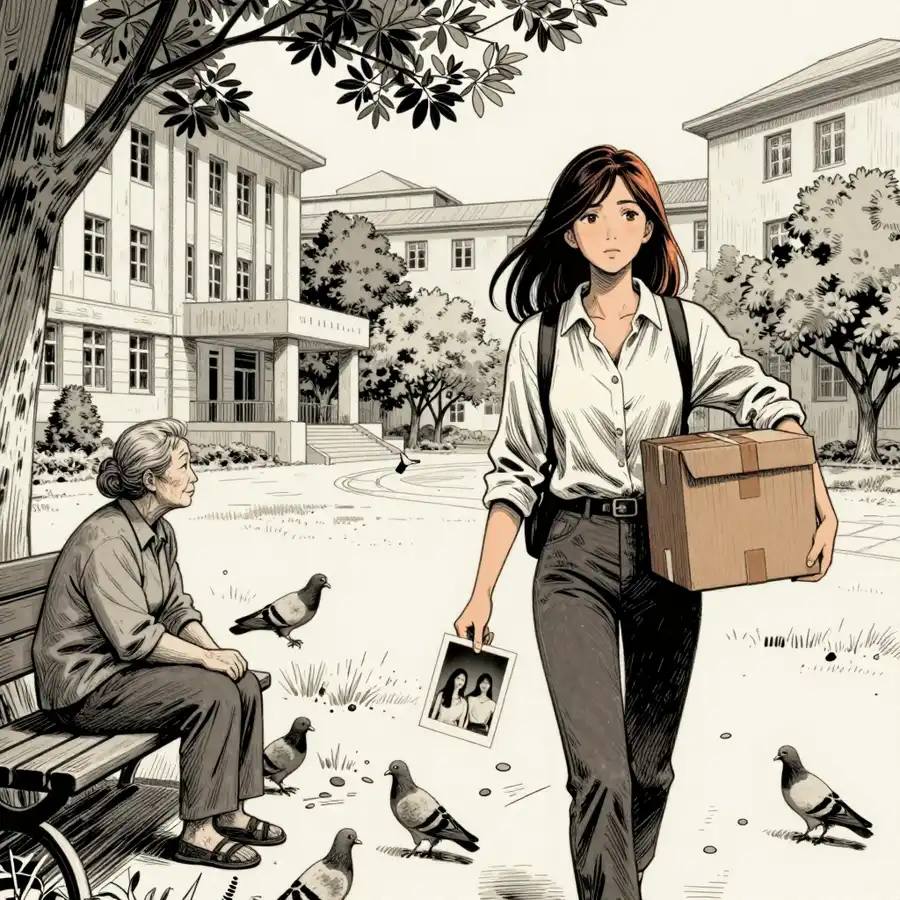
Ziqi tells herself she is closing out affairs. She tells herself this is administrative, practical, the same language her mother would use. She takes the bus to her mother's university and collects a cardboard box from the department secretary, a woman who hugs her too tightly and smells like hand sanitizer and sympathy. In the office, she works methodically. Desk drawers. Files. Pens that have dried out. A half-empty bottle of white-out.
The third drawer is locked. She tries her mother's keys, the ones on the ring she found in the kitchen, and the small silver one fits. Inside is a single folder, unlabeled, containing photographs.
They are old, faded to the color of tea stains, the edges soft and curling. Her mother at twenty-three, arm linked with another woman's arm, smiling in a way Ziqi does not recognize. A smile without defense, without the slight tightening around the eyes that Ziqi grew up watching. On the back, in her mother's handwriting:
Wei and Meilin. Spring Festival, 1998.
Ziqi has never heard this name.
She is leaving the building when she sees the retired professor sitting on a bench in the courtyard, feeding pigeons from a paper bag, his hair the color of the pigeons' wings.
"Your mother had a friend in those days. Zhang Meilin. They were inseparable. Wei and Meilin. Everyone knew them. They finished each other's sentences. They shared a desk in the library. Then, in their final year, something happened. One day they were sitting together at lunch, laughing so hard they couldn't breathe, and the next day they were not. Your mother moved to a different table. They graduated and lost touch. No one ever knew why."
Ziqi stands very still. The pigeons scatter around her feet. "Do you know where she is now?"
"I heard she stayed in the city. A bank, I think. The big one on Jiefang Road."
On the bus home, Ziqi searches for Zhang Meilin. She finds a LinkedIn profile: a commercial bank in the financial district. A woman in her fifties with a perm that retains something of the girl in the photographs, something around the eyes.
Ziqi writes the name in her notebook. Meilin. Underlines it three times. The pen tears the paper.
That night, she sits in the dark with the letters, searching for any mention of Meilin's name. She finds nothing. But Meilin was there when everything changed. Meilin was in the photograph, smiling at the camera while Ziqi's mother smiled at her. That is enough. That is everything.
我最亲爱的薇:
我读了你最新的论文,读了三遍。就是那篇关于农村人口流动模式及其对教育成果影响的。我大概只懂了百分之四十。但我读了三遍,因为是你写的,因为你的名字在最上面,因为在那几页里某个地方,有我爱的那颗头脑,有我在努力入睡、努力醒来、努力做任何需要我成为一个与你分离的人的时候在脑海里听到的那个声音。
你会是了不起的。你已经是了。我知道我说这个的时候你不信我。你以为我只是一个支持你的男朋友,以为我的赞美被情感蒙蔽了偏见,以为我忙着爱你而看不到你的缺点。你错了。如果你写了一篇购物清单,我不会说它了不起。我会说那是一篇组织严密、字迹优美的购物清单。这篇论文是非凡的。你把宏观数据和个体故事连接起来的方式,你从不忘记统计数字里那些真实的人的方式。这就是让你了不起的地方。不是数据。是在你的严格里活着的悲悯,是在你的方法论里跳动的心脏。
给我写信吧。告诉我你的学生。告诉我公交车上发生的趣事。告诉我任何事情。我渴望每一个细节。我渴望着你生活中那些普通的碎片,那些你觉得不值一提的碎片。那些才是我最想要的。
你的,在一间闻起来像旧纸张和孤独的图书馆里读着你的文字,
佳明
1998年12月10日
紫琪告诉自己,这是在收尾,处理事务。她告诉自己这是行政性的、实际的,是妈妈会用到的那些词语。她坐公交去了妈妈的大学,从系秘书那里领了一个纸箱。那是个拥抱她时太用力、闻着像洗手液和同情的女人。在办公室里,她有序地工作着。书桌抽屉。文件。干掉的笔。半瓶涂改液。
第三个抽屉是锁着的。她试了妈妈的钥匙,她在厨房找到的那串钥匙,其中那把银色的小钥匙刚好匹配。里面是一个文件夹,没有标签。里面是照片。
照片很旧了,褪色到茶水渍的颜色,边缘柔和地卷起。妈妈二十三岁的样子,手臂和另一个女人的手臂挽在一起,笑着,一种紫琪不认得的笑容。没有防备的笑容,没有紫琪从小到大看着长大的那种眼角微微收紧。背面,是妈妈的笔迹:
薇和美琳。1998年春节。
紫琪从来没有听过这个名字。
她离开大楼时,看到那位退休教授坐在庭院的长椅上。从纸袋里掏出面包喂鸽子,头发像是鸽子翅膀的颜色。
"你妈妈那时候有个朋友。张美琳。她们形影不离。薇和美琳。每个人都认识她们。她们能接上对方还没说完的话。她们在图书馆共用一张书桌。后来,在她们的最后一年,发生了什么事。一天她们还坐在一张桌子上吃午饭,笑得喘不过气来,第二天就不是了。你妈妈换到了另一张桌子。她们毕业了,失去了联系。没人知道为什么。"
紫琪站着一动不动。鸽子在她脚周围散开。"你知道她现在在哪吗?"
"我听说她留在了这个城市。好像是银行。解放路那家大银行。"
在回家的公交车上,紫琪搜索了张美琳。她找到了一个领英主页:金融区一家商业银行。一个五十多岁的女人,烫着一头还保留着照片中那个女孩几分味道的卷发。在眼睛周围,有那么一点。
紫琪把名字写在本子上。美琳。画了三道下划线。笔把纸都戳破了。
那晚,她坐在黑暗里翻着那些信,搜索任何提及美琳名字的地方。她什么也没找到。但美琳在一切都变了的时刻在那里。美琳在那张照片里,对着镜头微笑,而紫琪的妈妈正对着她微笑。那就够了。那就是一切。