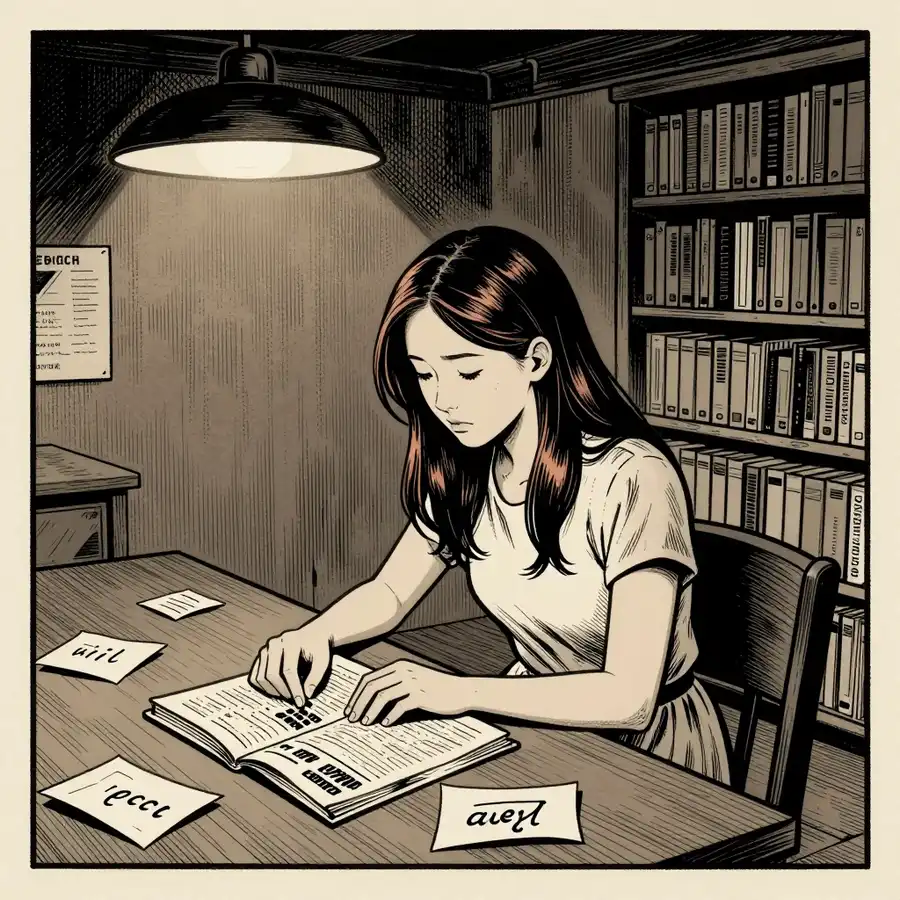
My Dearest Wei,
I am writing this from the small town near the coast where we spent our last trip together. Do you remember? The guesthouse with the blue shutters. The beach where we walked at sunset, your shoes in your hand, your feet in the water. The night we sat on the balcony and you told me about your research, and I watched your face in the moonlight instead of listening to the words, because your face was the only research I cared about.
Something was wrong on that trip. You were there but you were not there. You kept picking fights about nothing. The way I folded my clothes. The way I ate my breakfast, too fast, you said, as if I were trying to escape the meal. You looked at me like you were memorizing me instead of seeing me, like you were taking inventory. On the last night you cried in your sleep. When I asked what was wrong, you said: "Nothing. I'm just tired." But your voice was wrong. It was the voice you used when you were lying to protect me from something you thought I could not bear.
I knew you were lying. I have always known when you are lying. I know the way your left eyebrow moves, the way you touch your collar, the way you say "nothing" as if it is a complete sentence.
I am trying to understand what happened between that night and the silence that followed. I am sitting on the same balcony where we sat together and I am writing you this letter even though I know you will not answer, because the alternative is not writing, and I cannot bear the alternative. Not writing would mean accepting that you are gone. Not writing would mean admitting that the last thing I said to you was "I'll see you soon," and that soon has become never.
Tell me what I did. Please. I am begging you. I am on my knees on this balcony, and the ocean is loud, and I cannot hear myself think over the sound of missing you.
Yours, in the place where we last made sense,
Jiaming
May 20, 1999
Ziqi sits in the university archives basement, fluorescent lights buzzing overhead like insects trapped in glass. She is looking for one thing: a name. Liu Jiaming. A thread to pull.
In a bound faculty newsletter from 1999, she finds it.
Liu Jiaming (MS, Geological Engineering, 2000) has accepted a position with a mining consultancy in Perth, Australia.
Then nothing. A name in a newsletter, and then the trail goes cold.
She tries LinkedIn. Three Liu Jiamings in Australia. She messages the one in Perth, the one with the engineering degree, and waits. The response comes four days later, terse, polite.
I am not the person you are looking for. I studied in Australia, not America. I am sorry for your loss.
Dead end. The trail vanishes into sand.
She goes back to the letters. The later ones, where the tone shifts, where Jiaming is bewildered and hurt and slowly, quietly, breaking.
Who told you these things? Why won't you tell me what I did?
She finds the letter about Lihua. She has read it before, but now she reads it as evidence, as a clue.
Lihua is like a sister to me. You know this. Why does it suddenly matter? You have never been jealous before. You have never doubted me before.
Ziqi goes back to the retired professor. He is on the same bench, feeding the same pigeons, as if he has not moved in weeks.
"Did Jiaming have any other friends? Anyone who might know where he went? Anyone who visited?"
The professor squints at the sky. "There was a girl. Not in the department. A friend from his hometown, I think. She visited once. Lihua, I believe. A small thing, dark hair. She brought him dumplings. He laughed when she made him eat them cold."
Lihua. A real person. A real name.
Ziqi sits in her mother's apartment and spreads the letters across the bed. The last letter, December 1999. The marriage to Chen Guohua three months later. The speed of it. The recklessness of it, for a woman who never did anything quickly, never did anything without planning.
Her mother married a man she did not love because she was too proud to admit she had made a mistake. Because she had destroyed her own happiness and could not bear to look at the wreckage. Because she believed, truly believed, that feelings pass, and if she could just survive long enough, she would pass too, become someone else, someone who did not remember what it felt like to be loved like that.
Ziqi lies down and stares at the ceiling. She thinks about Meilin. The way she said "Your mother made her choices." The way she walked out of the tea shop without drinking her tea. The way she looked at Ziqi's eyes and saw someone else.
Meilin is the key. Meilin knows. And whatever she knows, it is connected to the letters, to Jiaming, to the love affair that ended without explanation, without farewell, without the dignity of a reason.
我最亲爱的薇:
我在我们最后一次一起旅行的小镇上,那个海边旅馆有蓝色的百叶窗。老板娘在门廊上认出了我,问起了你。我说你很好。我撒谎了。你在那里,但你不在那里。你从我指间溜走了,我看不见,而我却一直在寻找原因。我在这个门廊上坐着,写下我不相信你会读的信。我不知道除了写给你,还能怎么活下去。如果你来,我会在这里。我会永远在这里。我只会做这个。
你的,仍在等待的,
佳明
1999年5月20日
紫琪花了三周时间追踪线索。大学记录。教工通讯。1999年的一篇通讯里提到了他的名字。保罗·刘,材料科学,1997届。并在旁边列出了他在美国的硕士项目。科罗拉多大学,地质工程,1998-2000年。
她给校友会发了邮件。她打了电话。她发现自己和一个在澳洲矿业公司工作的大卫·刘通了电话。"对不起,找错人了。"然后是一个在大学的在线档案里找到了的邮箱地址得到了一个回复:
刘佳明已不在此机构工作。请尝试他目前的雇主,澳利康矿业咨询公司,珀斯。
珀斯。她又给他发了信息。这条信息毫无希望地发出去,穿过半个地球,穿过时间:
我是陈薇的女儿。我找到了你写给她的信。我需要和你谈谈。
第二天早上,有了回复:
我住在北岛陶朗加。你来,我见你。
一周后,她登上了去奥克兰的航班,十三小时飞越太平洋。木头盒子放在腿上,透过布料感受着它的质感,感受着它仍然在呼吸,仍然在等待。
她在陶朗加郊外找到了那栋房子。朴素,饱经风雨,在海湾上方。来开门的男人头发白了,但还透着棕,和他信里写的一模一样,像铜丝。他看到她,看到了她头发里的铜色。他看到了她妈妈脸上的轮廓。他的表情软了。
"你一定是紫琪。请进。"
美琳是那把钥匙。美琳知道。她所知道的,和那些信、和佳明、和那场没有解释、没有告别、甚至连理由的尊严都没有的爱情有关。