My Dearest Wei,
I mentioned Lihua in my last letter and your response was strange. You asked three questions about her, each one more specific than the last. Where does she live now? Does she still write to me? Have I seen her since I left? Your handwriting was smaller than usual, pressed harder into the page.
But your questions worried me. Not because of what you asked, but because of how you asked them. Like a lawyer cross-examining a witness. Like a doctor palpating a wound. Lihua is like a sister to me. You know this. We grew up in the same neighborhood, went to the same schools, shared the same desk in middle school. Our mothers are friends. Our families have known each other for generations. She is the person who knows all my embarrassing stories, all my childhood fears. She is not a threat. She has never been a threat.
Why does it suddenly matter? You have never been jealous before. You have never doubted me. So why these questions, and why now, and why with that particular tone that makes me feel like I am being accused of something I do not understand, something I did not do, something I would never do because you are the only person I have ever wanted, the only person I will ever want, the only person whose name I say in my sleep?
Please. Whatever you have heard, whatever you believe, talk to me. I am here. I am waiting. I am not going anywhere. I will wait until the mountains crumble. I will wait until the oceans dry. I will wait until you remember that you loved me, because I know you did. I know you did. I have the letters to prove it.
Yours, confused by your sudden coldness and terrified by your silence,
Jiaming
July 3, 1999
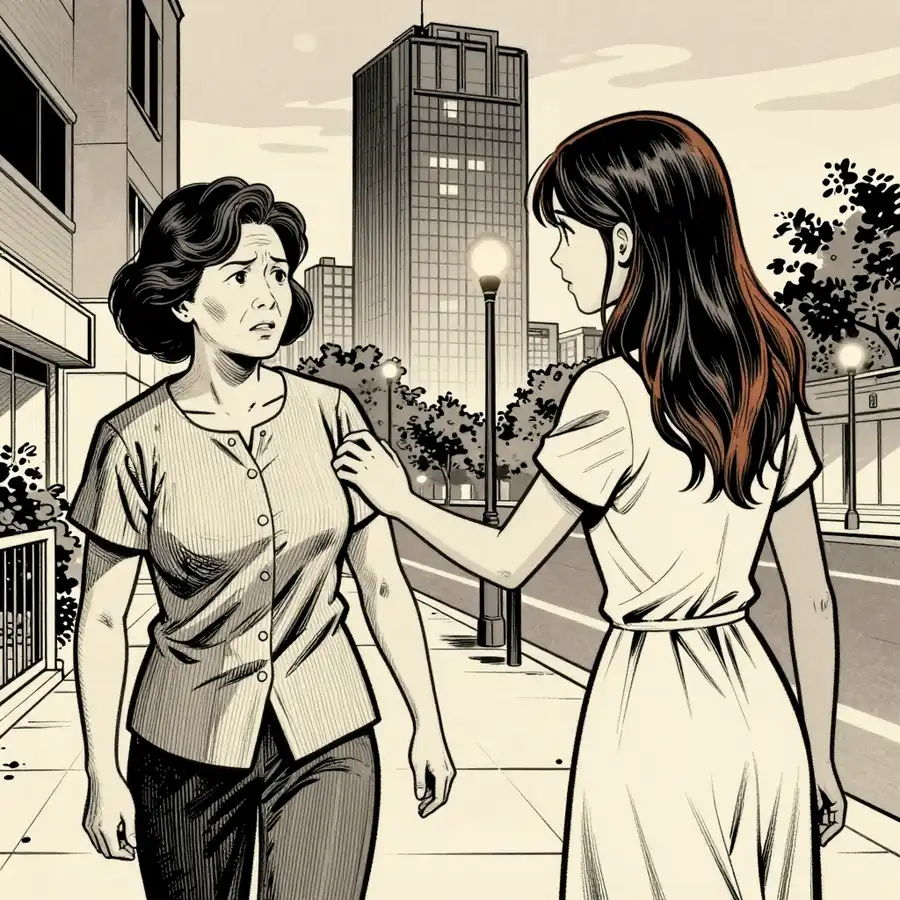
Ziqi does not call ahead. She goes to the bank at closing time and waits outside the glass tower, watching the sky darken in its reflection. At six-thirty, Meilin emerges, her navy suit replaced by a charcoal coat, her heels clicking on the pavement. Ziqi falls into step beside her before she can disappear into the crowd, before she can become another face in the stream of people going home to lives that make sense.
"I need to ask you about Lihua," Ziqi says.
Meilin stops. The crowd flows around them like water around a stone.
"I don't know anyone named Lihua," Meilin says, but her voice has changed. It has gone thin, stretched tight, the voice of someone holding something heavy.
"Jiaming mentioned her in his letters. His childhood friend. Like a sister. He couldn't understand why my mother was suddenly jealous of her. He couldn't understand why my mother was suddenly afraid of losing him to someone she had never met."
Meilin's fingers twitch. Then they still, as if she has commanded them to behave.
"I told you. I didn't know him well. I don't know anything about his friends."
"But at the tea shop, you said: 'Your mother thought...' and then you stopped. You said she was suspicious of them. But if you didn't know him well, how did you know about my mother's suspicions? How did you know what she thought?"
"You should let this go," Meilin says, and her voice is almost gentle, almost kind, which is worse than anger. "Your mother is gone. Jiaming is gone. Whatever happened between them happened a long time ago. It belongs to history now. It belongs to dust."
"I'm not trying to bring her back. I'm trying to understand her. I'm trying to see her whole."
"Understanding is overrated." Meilin resumes walking, faster now, her heels striking the pavement like hammer blows. "Some things are better left buried. Your mother understood that. That's why she buried them. That's why she built a life on top of them. She was happy. She had you. She had her work. She had everything she needed."
"Did she?" Ziqi reaches out and touches her arm, and Meilin flinches as if the touch burns. "Please. I know you know something. You were her closest friend when everything changed. You must have seen something. You must have heard something."
Meilin stops. Her eyes are dry but hard, dry as stone, and Ziqi realizes she is looking at a woman who has not cried in a very long time, who has trained herself not to cry.
"Your mother was very private. She didn't share her feelings. Not even with me. Especially not with me, at the end."
"The last few months? Before she broke up with him?"
"Yes. She changed. She became distant. She stopped telling me things. I would ask what was wrong and she would say nothing, everything is fine. But it wasn't fine. I could see it wasn't fine. She stopped eating. She stopped sleeping. She would sit in the library for hours with the same page open, not reading, just staring."
"Did you ask about Jiaming?"
"I asked. She said they were having problems. She didn't say what kind. Then one day she told me it was over. Just like that. No explanation. No tears. She said she had made a decision and she was going to stick to it. She said it the way she said everything, as if it were a theorem she had proven and there was no point debating it."
"Did she say why?"
"No." Meilin's voice is flat, but her hands are shaking. "She never said why. She married your father three months later. She never spoke of Jiaming again. Not once in twenty-eight years. It was as if he had never existed. It was as if she had never loved him. It was as if she had never loved anyone."
"Did you ever ask?"
"I asked once. A year later. At her wedding. I pulled her aside in the bathroom, away from the guests, away from the noise. I asked if she was sure, if she was happy. She looked at me with that expression she had, that expression that said the conversation was over before it started. She said: 'Meilin, I have made my choice. I suggest you make yours and stop living in my past.'"
Meilin turns and walks toward the subway entrance, her back straight, her pace unhurried, and Ziqi watches her go.
She said your mother was private. She said your mother stopped telling her things. She said your mother made a decision and stuck to it.
But she never said she did not know why.
我最亲爱的薇:
你上一封信问了三个关于丽华的问题。她住在哪里?她还给我写信吗?我走了以后见过她吗?她住在我们的家乡。她偶尔写信,都是关于她家庭的新闻,她在纺织厂的工作。我走后没再见过她。
丽华对我来说就像妹妹。我们一起在同一片街区长大,上同一所学校,在初中时共用一张课桌。我们的妈妈是朋友。我们的家庭认识几代人了。她是我历史的一部分,是无法改变或质疑的一部分。
这为什么突然变得重要起来了?你从没嫉妒过。你从没怀疑过我。我从没给你理由怀疑我。那为什么是现在?为什么用那种口气?那种让我觉得我被指控了我甚至不明白是什么的东西的口气?
不管是谁跟你说了什么。不管是谁。那不是真的。和我说话。拜托。我就在这里。我在等。我哪里也不会去。
你的,困惑而受伤的,
佳明
1999年7月3日
紫琪在下班时分去银行等美琳。潮水般的员工从旋转门里涌出来,她在那群人里一眼认出了她:深蓝套装,一丝不变的烫发。紫琪在她旁边跟上步子,近得无法被忽视。
"跟我聊聊丽华的事。"
美琳停下了。人群在她们周围流动。她的脸掠过一系列紫琪追踪不及的表情。
"丽华是佳明最好的朋友。像个妹妹。你知道这个。"
"我妈妈认为他们订过婚。"
美琳的喉部动了一下。喉口可见的一跳。"你妈妈认为那是一次真正的安排。不是我说的。是你妈妈自己相信的。"
"但你知道那个谣言吗?"
"我知道。是啊。每个人都知道。它们到处都是。那种话。你无法追踪源头。"
"你告诉她了吗?"
美琳转身看着她。她眼睛里有什么东西。一闪而逝,又深得无法打开。然后消失了。"你妈妈做了一些决定。我们每个人做的决定都来自我们的了解。如果她相信了不是真的东西,这不是她的错,也不是我的。这只是发生了。问题是,你现在想从所有这些里面得到什么?"
紫琪没有回答。回答在她胸口里,像一块铁,还没有准备好被说出来。
美琳注视着她的脸,寻找她妈妈的痕迹。"感觉确实会过去。那不是假话。你妈妈是对的。只是它们同时也会留下伤疤。她死后你找到了它们。那些信,那个藏在衣柜后面的盒子,用旧丝带系着。然后你现在想找到他。你想知道的是:他是不是你爸爸。他从来不是你妈妈告诉你的那个样子。"
她的声音很轻,但很稳。她既没有承认,也没有否认。但她也从没说她不知道为什么。