She found him through a single alumni record: University of Colorado, geological engineering, 2000. Denver. Perth. Then a message to a Jiaming Liu in New Zealand, sent in desperation, sent without hope.
I am looking for Liu Jiaming. I knew a Chen Wei once, a long time ago.
She sent her number. She waited three days. He called back on a Sunday morning, cautious, hesitant, his voice older than she expected, rougher, as if he had not used it for something important in a very long time.
"I am Liu Jiaming," he said. "I knew a Chen Wei once. A long time ago."
She told him she had found letters. She told him her mother had died. The line went quiet for so long she thought he had hung up. When he spoke again, his voice was different. Smaller.
He gave her an address on the North Island and said, "If you want to talk, you will have to come here. I cannot do this over the phone. I cannot do this without seeing her in you."
So she came.
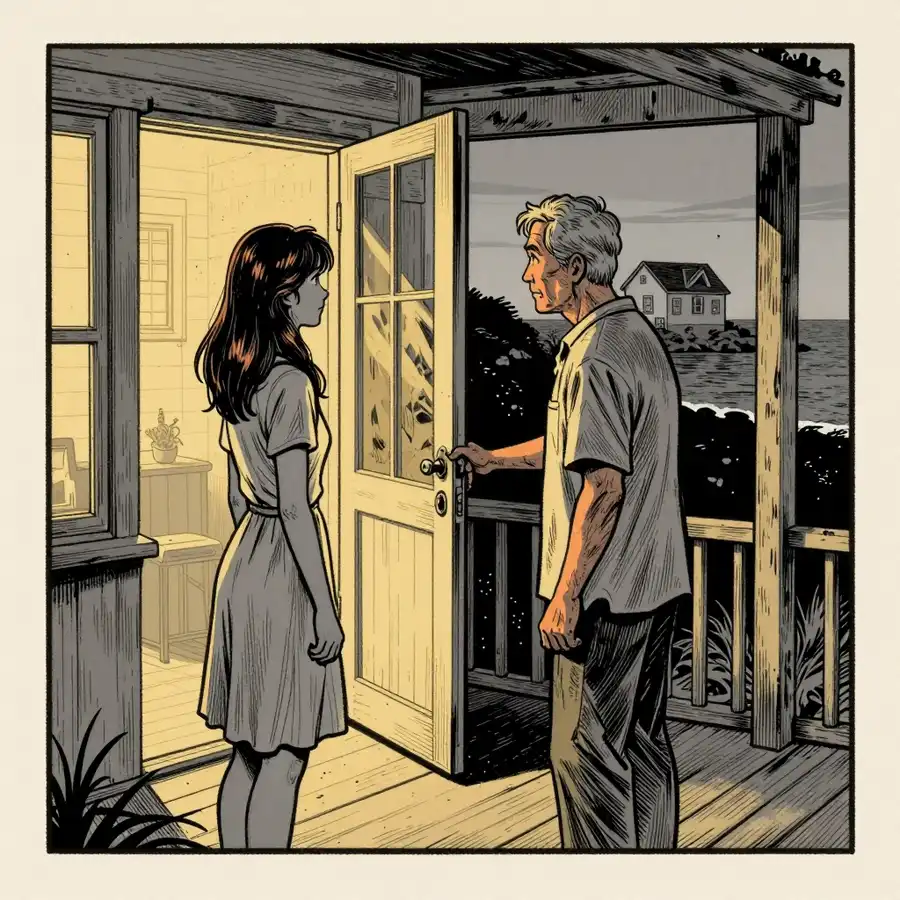
Now she sits in a rental car outside a weathered house on a coastal hill, the ocean loud in her ears, the wind carrying salt and something else, something that smells like memory. The porch light is on. She touches the box through her bag, feeling the wood warm beneath her fingers, gets out, and walks to the door. She raises her hand to knock.
The door opens before she can touch it.
A man stands backlit by the warm light inside. His hair is mostly grey, but the brownish tint is still there, catching the light like copper wire. He looks like someone who has forgotten how to hope for surprises, who has trained himself not to expect anything good in the mail, in the doorway, in the world.
"Yes?"
"I am Chen Wei's daughter," Ziqi says. "My name is Ziqi. I found your letters."
He goes very still. His eyes search her face, moving from feature to feature, finding her mother's eyes in her own, her mother's cheekbones, her mother's mouth. He looks at her the way you look at a ghost you have been waiting for.
"Chen Wei," he says, and the name sounds like a prayer and a wound, like something holy and something broken.
A woman's voice calls from inside, warm, curious. "Jiaming? Who is it?"
"A colleague," he calls back, and his voice is steady only because he has made it steady. "An old colleague. Give me a moment."
He steps outside and closes the door. The wind from the ocean is cold, biting, and Ziqi realizes she is not wearing a coat, that she has not thought about practical things in days.
"Your mother died," he says. Not a question. A confirmation of something he has already accepted, already mourned in advance.
"Three months ago. Leukemia." The word feels small in her mouth, insufficient for what it describes.
He closes his eyes. When he opens them, they are wet, but he does not blink, does not look away. "I am sorry. I am so sorry. I would have come. If I had known. I would have crossed the world."
"I need to talk to you. But not here."
He nods. "There is a cafe in town. On the main street. Eight o'clock tomorrow. I will tell my wife I need to settle an old debt. She will understand. She knows there are parts of me she cannot reach."
The next morning, Ziqi sits at a corner table, watching the door, her hands wrapped around a cup of coffee she has not touched. Jiaming arrives at eight-fifteen, wet hair, a jacket and scarf, as if he has walked through rain to get here. He spots her and walks over with a hesitation that makes her chest ache, a hesitation that says he is not sure he is allowed to want this.
"I told my wife a close colleague died," he says as he sits down. "That her daughter has questions. She understands. She has always understood that there are rooms in me she cannot enter."
Ziqi takes the wooden box from her bag and places it on the table between them. The brass clasp catches the light.
"I think," she says, "that we should start with these."
Jiaming looks at the box. He touches the brass clasp with a finger that trembles. He opens it.
佳明说他们会在一家咖啡店见面。第二天早上,主街。他不想让妻子受打扰。不是一个死去二十年的女人突然重现,不是一封被读到快要碎裂的信。
紫琪先到了。她找了一张角落里摇摇晃晃的小木头桌子坐下,叫了咖啡,咖啡凉了她都没有喝。门上的铃响了。他进来的时候看起来更老了。更疲惫了,仿佛真相已经在压垮他,即使他还没听到。
他带来了自己的盒子。一个纸板盒,来自一家已经不存在了的文具店。里面是她的信。薇的信。每封都留着。
"你留着它们。"
"我当然留着。它们是她留给我的全部。"
她把木头盒子放在桌上,打开了搭扣。他拿起最上面那封,那么轻柔,仿佛它可能会碎。"1998年10月。我写这封的时候,窗外正在下雪。我太孤单了,喘不过气。我坐在桌前,壁炉架上有她的照片,我把台灯转过去让光照着她的脸。我还记得那种感觉。我仍然可以回到那个房间里去。我仍然可以看到她。"
紫琪先读了她的信。是她妈妈的笔迹。那些环状,她从小就在便利贴上、购物清单上、冰箱上看到的那一样的斜面。她的妈妈,二十三岁,恋爱了。写着她的研究,她的学生,公交车上发生的一件趣事。写着:"我会在奇怪的时刻想到你。讲课的中间。等水烧开的时候。我不知道那是不是爱,但我不知道还能叫它什么。"
紫琪哭了。哭得那么凶,看不清信纸。她哭到墨水在她手指下洇了。佳明没有碰她。他没有说话。他只是等。
她读了每一封信。读到最后,她的手湿透了,脸破了相,但那不是悲伤。至少不只是悲伤。那是认出了什么。认出了这个她妈妈可能成为的女人。认出了这个她妈妈原来是的人。
这是薇。不是那个对浪漫翻白眼的妈妈。是那个对浪漫翻白眼的妈妈,因为她曾经拥有过真的东西,一次,然后失去了。
"发生了什么事?最后一次旅行。她做了一些她永远无法解释的事。那样不像她。我了解她。你妈妈做什么事都有原因。如果她结束了,如果她突然消失了,如果她嫁给了别人。那原因就是那个原因,不管我有没有听说过。"
紫琪看着他。
"有一个人。美琳。我们最后一次打电话的时候她挂了我的电话,但她没有否认。她只是不愿意说出来。"
佳明的表情变了。"美琳。我记得美琳。"一阵停顿。"她一直对我有一点好感。我感觉得到。我从来没说过什么。这似乎是没有伤害的事。只是小小的,好像是一种暗恋。但后来。在一切都变了以后。我怀疑过她是不是跟你妈妈说了什么。我不知道。我从来没法知道。"
紫琪走到外面。她打给了美琳。铃响了三声。接了。
"你喜欢他。你先喜欢他的。你先认识他,然后做了介绍。当你看到他们后来变成的样子。"
"我不知道你在说什么。"美琳的声音很平,是机械的。
"他注意到了。他注意到了你看他的样子。你太小心翼翼了。但他在意了。他从来不说,因为你觉得那没有伤害。跟丽华结婚那件事。那个童年时的笑话,那就是你在那个周末之前对我妈妈讲的事情。你让她相信了那是真的。"
沉默。一声呼吸。然后:"你妈妈做了她的选择。"
"你替她做了选择。"
"你凭什么。"
"她相信了你。你是她最好的朋友。你认识她太多年了。她没法想象你会做那种事。所以她结束了。她嫁给了我爸。她用沉默建了一辈子。"
美琳什么都没有说。她挂断之前有整整一个呼吸的长度。然后,嘟。
紫琪在咖啡店外面站了很久,听着海浪,感觉到那个盒子还贴在她的胸口上。她说了出来,现在佳明知道了。他没有她的血,但他在她胸口。在那个盒子里,在信里,在她穿越半个地球去寻找他这件事里。